
Ceramic vs Plastic Reptile Bowls — Which Is Actually Better?
Walk into any pet store and you'll find reptile bowls in every shape, size, and material. But when it comes to actually feeding your bearded dragon or leopard gecko, the material matters more than most people realize. The wrong bowl leads to escaped feeders, bacterial buildup, and frustrated reptile owners.
In this guide, we compare ceramic and plastic reptile bowls head-to-head across the factors that actually matter: hygiene, mealworm containment, durability, and value.
The Short Answer
Ceramic wins — for hygiene, feeder containment, and long-term durability. Plastic is cheaper upfront but costs more over time due to scratching, bacterial buildup, and frequent replacement.
Here's the full breakdown.
Head-to-Head Comparison
1. Mealworm Containment
Ceramic: ✅ Excellent
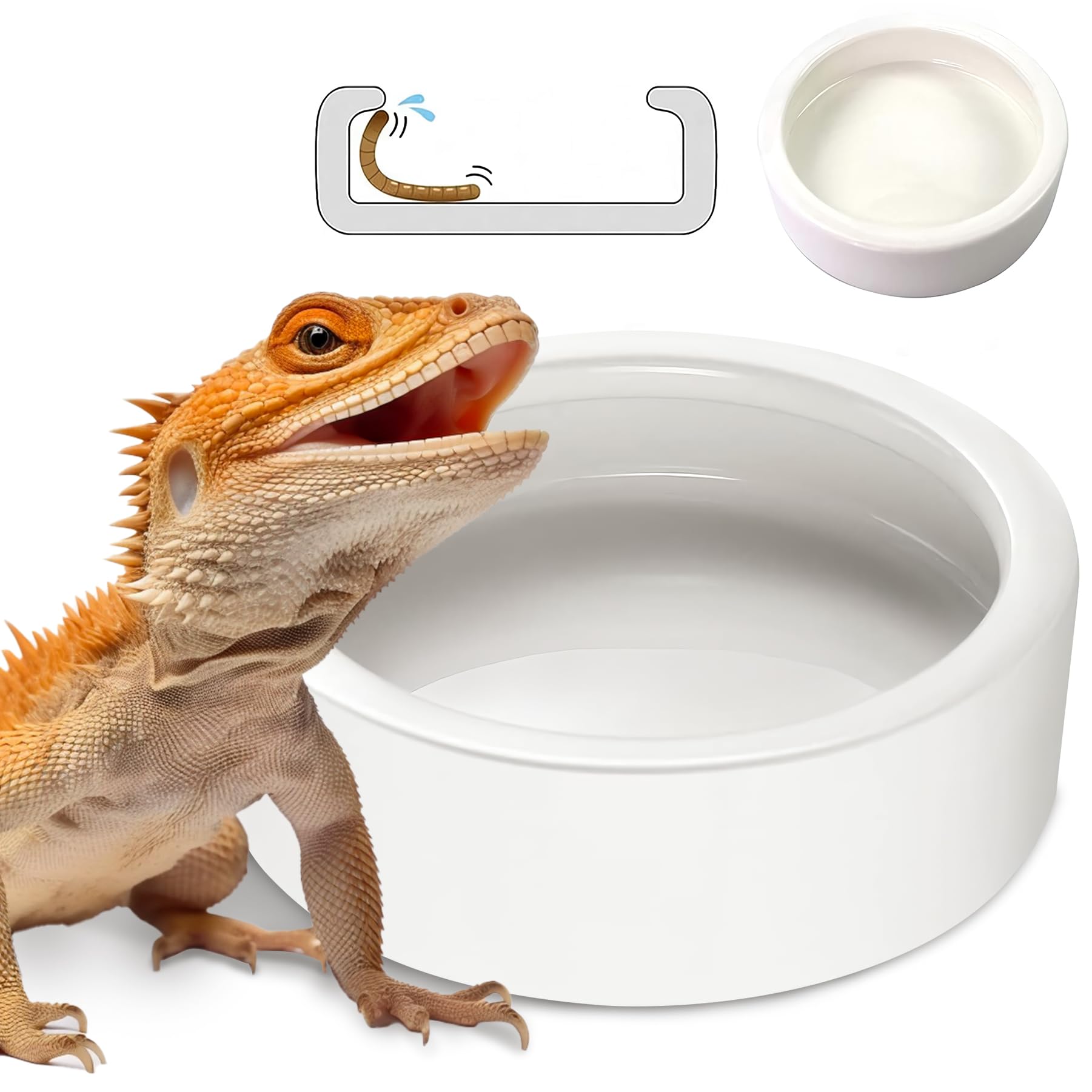
Glazed ceramic has a completely smooth surface that mealworms cannot grip. Combined with adequate wall height, a ceramic bowl is the most reliable way to keep mealworms in the bowl and out of your enclosure.
Plastic: ❌ Poor over time
New plastic bowls may have smooth surfaces, but they scratch with regular cleaning. Those micro-scratches give mealworms just enough grip to climb out. A plastic bowl that worked fine when new becomes an escape risk within weeks.
→ See our full guide: How to Keep Mealworms from Escaping a Reptile Bowl
2. Hygiene and Bacterial Resistance
Ceramic: ✅ Excellent
Ceramic is non-porous — bacteria, mold, and odors cannot penetrate the surface. A quick wash (or dishwasher cycle) leaves it genuinely clean. This matters a lot in a warm reptile enclosure where bacteria multiply quickly.
Plastic: ⚠️ Degrades over time
Plastic is porous at a microscopic level, and scratches create grooves where bacteria hide. Even thorough washing can leave behind biofilm in scratched plastic. Over time, plastic bowls develop a persistent odor that's hard to eliminate.
3. Stability
Ceramic: ✅ Excellent
Ceramic bowls are naturally heavy. A full-grown bearded dragon foraging aggressively won't tip a ceramic bowl. Stability means fewer spills, fewer escaped feeders, and less substrate contamination.
Plastic: ❌ Poor
Lightweight plastic bowls tip easily, especially when a beardie is actively hunting feeders. A tipped bowl means scattered mealworms, wet substrate, and a frustrated owner.
4. Durability
Ceramic: ✅ Long-lasting
A quality ceramic bowl lasts years without degrading. The surface stays smooth, the glaze stays intact, and it performs the same on day 1 as it does on day 500.
Plastic: ❌ Short lifespan
Plastic scratches, discolors, and warps over time — especially with repeated dishwasher cycles or exposure to heat. Most plastic reptile bowls need replacing every few months.
5. Upfront Cost
Ceramic: ⚠️ Higher upfront
Ceramic bowls cost more initially. However, because they last years without replacement, the long-term cost is lower than repeatedly buying cheap plastic bowls.
Plastic: ✅ Cheaper upfront
Plastic bowls are inexpensive and widely available. If budget is the primary concern, plastic is accessible — just be prepared to replace it regularly.
6. Aesthetics
Ceramic: ✅ Natural look
Ceramic bowls blend naturally into bioactive and naturalistic enclosure setups. They look premium and don't clash with live plants, cork bark, or stone backgrounds.
Plastic: ⚠️ Functional but basic
Plastic bowls come in many colors but rarely look natural. In a carefully designed enclosure, a bright plastic bowl can look out of place.
Summary Table
| Factor | Ceramic | Plastic |
|---|---|---|
| Mealworm containment | ✅ Excellent | ❌ Degrades |
| Hygiene | ✅ Non-porous | ⚠️ Scratches harbor bacteria |
| Stability | ✅ Heavy, won't tip | ❌ Tips easily |
| Durability | ✅ Years | ❌ Months |
| Upfront cost | ⚠️ Higher | ✅ Lower |
| Aesthetics | ✅ Natural | ⚠️ Functional |
When Plastic Makes Sense
Plastic bowls aren't without merit. They're a reasonable choice if:
- You're setting up a temporary or quarantine enclosure
- You need a very large dish that would be prohibitively expensive in ceramic
- You're using it for dry foods only (no live feeders, no water)
For everyday feeding with live feeders like mealworms or crickets, ceramic is the better long-term investment.
Our Recommendation: PawPlayHub Ceramic Anti-Escape Bowl
If you're ready to switch to ceramic, the PawPlayHub Ceramic Anti-Escape Bowl is our top pick. It's purpose-built for reptile feeding — smooth glazed walls for mealworm containment, a weighted base for stability, and a non-porous surface that stays hygienic wash after wash.
It works equally well as a food dish and a shallow water dish, making it a versatile addition to any reptile enclosure.
→ See our full review: Best Bearded Dragon Food and Water Dish in 2026
→ Related: How Often Should Bearded Dragons Drink Water?
→ Related: How to Keep Mealworms from Escaping a Reptile Bowl
Make the switch to ceramic today
The PawPlayHub Ceramic Anti-Escape Bowl — smooth walls, weighted base, dishwasher safe. Built to last, built to contain, built for reptiles.
Shop the Bowl →Frequently Asked Questions
Is ceramic or plastic better for reptile bowls?
Ceramic is better for most reptile feeding situations. It's non-porous (more hygienic), heavier (more stable), and maintains a smooth surface that prevents mealworm escapes. Plastic is cheaper upfront but scratches over time, harbors bacteria, and needs frequent replacement.
Can I put a ceramic reptile bowl in the dishwasher?
Yes — most food-grade ceramic bowls are dishwasher safe. The glaze is heat-resistant and won't degrade in the dishwasher the way plastic can warp or discolor over time.
Why do mealworms escape plastic bowls but not ceramic?
Plastic scratches with regular use and cleaning, creating micro-grooves that mealworms can grip. Glazed ceramic maintains a completely smooth surface that mealworms cannot climb, even after years of use.
How long does a ceramic reptile bowl last?
A quality ceramic bowl can last many years without degrading. Unlike plastic, ceramic doesn't scratch, warp, or discolor over time. The main risk is chipping if dropped, but under normal enclosure use, ceramic is extremely durable.
Are plastic reptile bowls safe for bearded dragons?
Food-grade plastic bowls are generally safe when new. The concern is hygiene over time — scratched plastic harbors bacteria that's difficult to fully remove, which can pose a health risk in a warm reptile enclosure. Replacing plastic bowls regularly mitigates this risk.
What size ceramic bowl does a bearded dragon need?
For adult bearded dragons, a 5–6 inch diameter ceramic bowl with walls at least 2 inches tall works well for both food and water. Juveniles do fine with a 4–5 inch bowl. The key is smooth walls and sufficient height for mealworm containment.