
How to Keep Mealworms from Escaping a Reptile Bowl
You put a handful of mealworms in your bearded dragon's bowl. You turn around for two minutes. You come back and half of them are gone — not eaten, just gone. If this sounds familiar, you're not alone. Mealworm escape is one of the most common frustrations for reptile keepers, and it's almost always a bowl problem, not a mealworm problem.
In this guide, we'll explain exactly why mealworms escape, what bowl features actually stop them, and which setup works best for bearded dragons, leopard geckos, and other reptiles.
Why Do Mealworms Escape Reptile Bowls?
Mealworms are surprisingly capable climbers when given the right surface. They escape bowls for three main reasons:
- Textured walls — Any roughness, scratch, or texture gives mealworms enough grip to climb. Plastic bowls scratch over time, creating micro-grooves that act like a ladder.
- Low wall height — Mealworms can arch their bodies and flip over the rim of shallow dishes. Walls under 1.5 inches are rarely sufficient.
- Lightweight bowls that tip — When a bowl tips, mealworms spill out and scatter before your reptile can eat them.
The solution to all three is choosing the right bowl material and design from the start.
What Type of Bowl Stops Mealworms from Escaping?
1. Smooth-Walled Ceramic Bowls
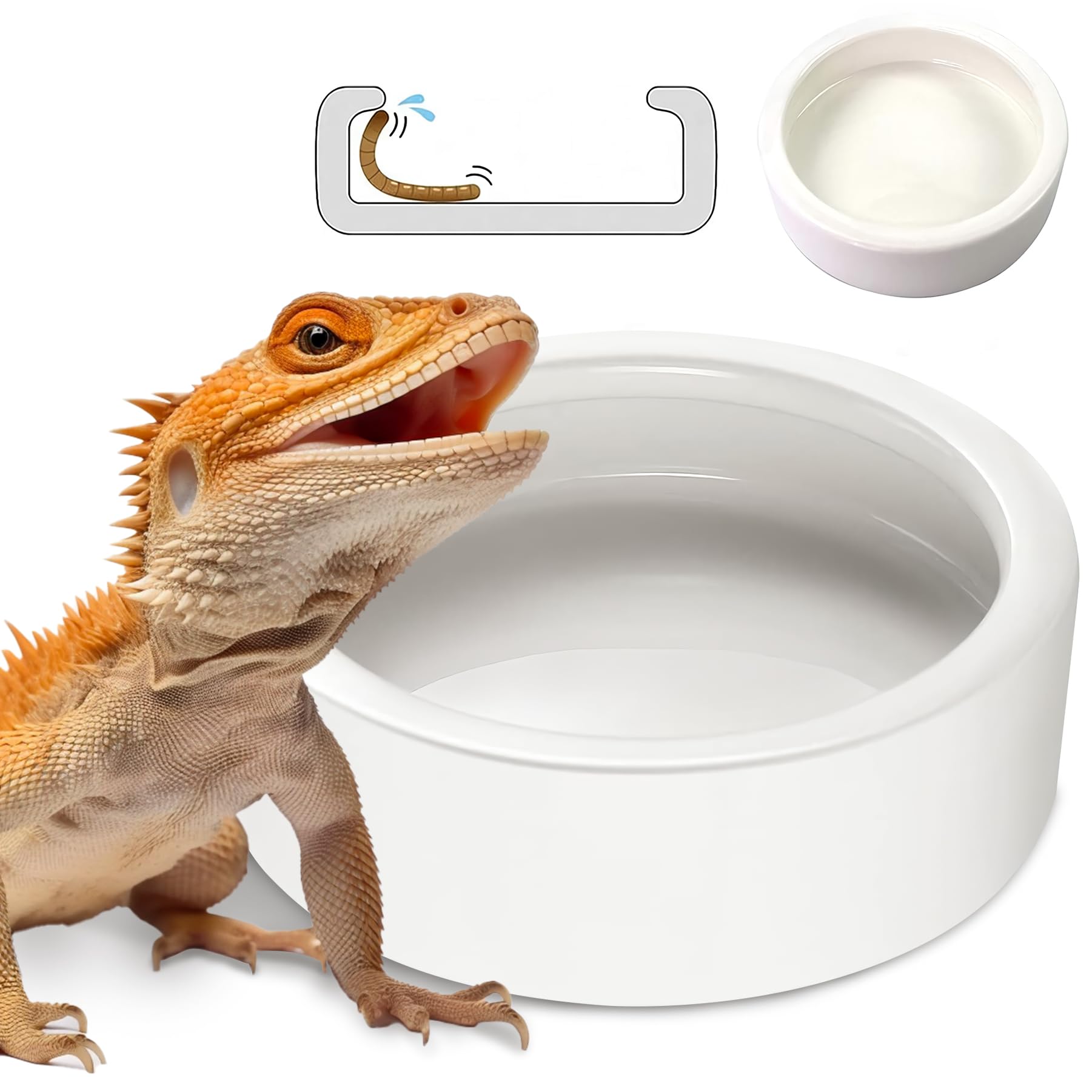
Ceramic is the most effective material for mealworm containment. The glazed surface is completely smooth — mealworms cannot grip it no matter how hard they try. Unlike plastic, ceramic doesn't scratch over time, so it stays escape-proof for years.
The PawPlayHub Ceramic Anti-Escape Bowl is specifically designed with this in mind — smooth glazed walls, sufficient height, and a weighted base that won't tip during feeding.
→ See also: Best Bearded Dragon Food and Water Dish in 2026
2. Wall Height: The 2-Inch Rule
For reliable mealworm containment, aim for bowl walls that are at least 2 inches tall. This prevents mealworms from arching over the rim. Combine height with smooth walls and you've eliminated 95% of escape attempts.
3. Avoid Textured or Ribbed Interiors
Many decorative reptile bowls have textured interiors meant to look natural. These textures are exactly what mealworms need to climb. Stick to smooth-glazed interiors regardless of how the outside looks.
4. Weight Matters
A heavy bowl stays put. When your beardie is foraging aggressively, a lightweight plastic dish will tip and scatter feeders across the enclosure. Ceramic bowls are naturally heavy enough to stay stable.
Step-by-Step: Setting Up a Mealworm-Proof Feeding Station
- Choose a smooth ceramic bowl with walls at least 2 inches tall
- Place it on a flat, stable surface inside the enclosure — not on substrate that can shift
- Add only as many mealworms as your reptile will eat in one sitting — fewer worms means less escape pressure
- Remove uneaten mealworms after 15–20 minutes — mealworms left overnight will burrow into substrate or escape
- Clean the bowl every 1–2 days — mealworm frass (waste) builds up quickly and can cause bacterial growth
Common Mistakes That Lead to Mealworm Escapes
- Using a plastic deli cup or takeaway container — these have textured sides and are too lightweight
- Overfilling the bowl — mealworms pile on top of each other and the ones on top can reach the rim
- Leaving mealworms unattended for long periods — even the best bowl can't contain mealworms indefinitely if your reptile isn't actively eating
- Using a bowl that's too wide and shallow — surface area matters less than wall height for containment
→ See our full list: 7 Common Bearded Dragon Feeding Mistakes (and How to Fix Them)
Does Bowl Size Affect Mealworm Containment?
Yes — but not in the way most people think. A wider bowl doesn't help with containment; it just gives mealworms more room to roam and find weak spots. What matters is wall height and surface smoothness. A smaller, deeper bowl with smooth ceramic walls will outperform a wide, shallow dish every time.
For most adult bearded dragons, a 5–6 inch diameter ceramic bowl with 2-inch walls is the sweet spot.
Our Recommendation
After testing multiple options, the PawPlayHub Ceramic Anti-Escape Bowl is the most reliable solution we've found for mealworm containment. The smooth glaze, adequate wall height, and weighted base address all three root causes of mealworm escape in one product.
Stop the mealworm escape for good
The PawPlayHub Ceramic Anti-Escape Bowl — smooth walls, weighted base, dishwasher safe. Designed specifically so your reptile eats the mealworms, not your carpet.
Shop the Bowl →Frequently Asked Questions
Can mealworms climb ceramic bowls?
No — mealworms cannot climb smooth glazed ceramic surfaces. The glaze provides no grip for their legs. This is why ceramic is the preferred material for reptile feeding bowls over plastic or resin.
How tall should a reptile bowl be to contain mealworms?
At least 2 inches of smooth wall height is recommended. Mealworms can arch their bodies and flip over shorter rims, especially if the surface has any texture they can grip.
Why do mealworms keep escaping my reptile's bowl?
The most common causes are: textured bowl walls that give mealworms grip, walls that are too short, or a lightweight bowl that tips during feeding. Switching to a smooth ceramic bowl with 2-inch walls solves all three issues.
How many mealworms should I put in the bowl at once?
Only add as many as your reptile will eat in one feeding session (typically 10–20 for an adult bearded dragon). Overfilling the bowl increases escape pressure as mealworms pile on top of each other.
Should I remove uneaten mealworms from the enclosure?
Yes — always remove uneaten mealworms after 15–20 minutes. Mealworms left in the enclosure overnight can burrow into substrate, escape the bowl, or even bite your reptile while it sleeps.
Do plastic reptile bowls scratch and become easier to escape over time?
Yes — plastic scratches with regular cleaning and use. Those micro-scratches create texture that mealworms can grip. Ceramic bowls maintain their smooth surface indefinitely, making them a better long-term investment.